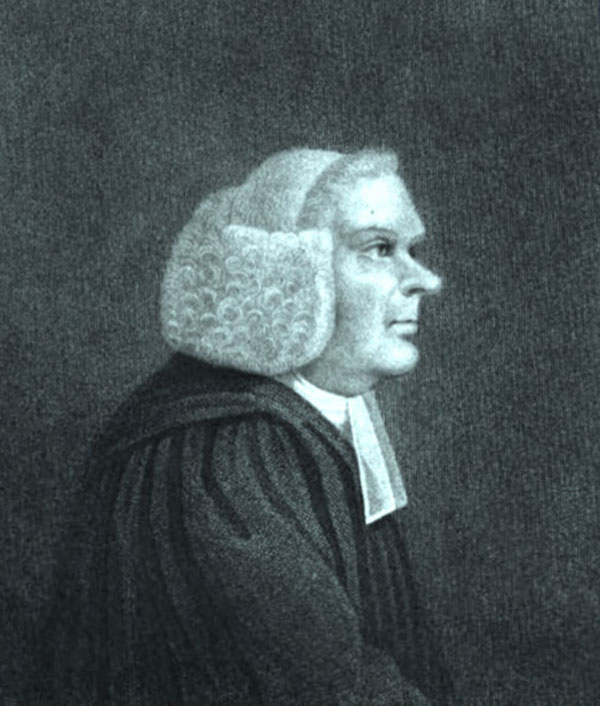
JOHN BERRIDGE, “THE OLD DEVIL,” PREACHED THE NEGLECTED GOSPEL
“A kick from the world does believers less harm than a kiss.”
FOR TWENTY YEARS, John Berridge was known as “the old devil” by the clergymen around Everton (a district of Liverpool in England). They grumbled against him because he preached to the people of their parishes—souls they had neglected. Not only that, but he used illustrations they considered in bad taste, and people sometimes shrieked and jerked when he preached.
It wasn’t always so with Berridge. He originally determined to enter the church only because it presented a better living than farming. After completing his studies at Cambridge, he accepted a pulpit in Stapleford, where he urged his listeners to become better people. After six years, he could not point to a single changed life.
He moved on to Everton. One day a voice spoke to him clearly. “Cease from your own works; only believe.” He began to preach faith in Christ. At once people got converted and demonstrated changed
lives. Berridge burned all his old sermons. What good were they? When word got out, this created quite a stir and prompted even more people to listen to him. Soon he began preaching in neighboring parishes whose clergymen neglected the Gospel. Threatened with jail for doing this, he said “A kick from the world does believers less harm than a kiss.”
When clergymen barred him from speaking in their pulpits, he preached in barns and in fields. He had such a good voice that fifteen thousand people could hear him at once. His bishop rebuked him for preaching “at all hours and on all days.” “My lord,” said Berridge, “I preach only at two seasons.” Asked what they were, he quoted from Paul’s admonition to Timothy: “In season and out of season, my lord.”
Berridge gave almost every penny of his income to further the gospel and meet people’s needs. Although he preached a serious message, he did so with such wit that he was able to send friends into convulsions of laughter.
On this day, 22 January 1793, Berridge died. His epitaph, which he wrote himself, described him as an “itinerant servant of Jesus Christ, who loved his master and his work, and after running on his errands many years was called to wait on him above.” It then asked, “Reader, are you born again?”
Berridge was the author of hymns. One begins,
O happy saints that dwell in light,
And walk with Jesus clothed in white,
Safe landed on that peaceful shore,
Where pilgrims meet to part no more:
Released from sorrow, toil and strife,
Death was the gate to endless life,
And now they range the heavenly plains
And sing His love in melting strains.
Other Notable Events
304
(probable date) Martyrdom of Vincent of Saragossa, Spain’s first famous martyr, who had been starved, racked, exposed in the stocks, and partially roasted.
1623
Burial of St Macarius at Zhabyn, opposite the Orthodox monastery he had founded. This Russian ascetic had allegedly performed great miracles.
1867
Ambatonakanga Memorial Church opens in Madagascar in honor of Christians marytered under the cruel queen Ranavalona.
1876
Death at Ticehurst, Sussex, UK, of John Dykes, who had written some well-known hymn tunes, two of which we sing to this day: “Holy, Holy, Holy” and “Jesus, the Very Thought of Thee.”
1915
Death at Highland Falls, New York, of hymnwriter Anna Bartlett Warner, most famous for the chidren’s hymn “Jesus Loves Me.”
1918
Death in Jewett City, Connecticut, of Mary Haughton Brown, a Baptist teacher and hymnwriter. Most famous of her hymns had been “I’ll Go Where You Want Me to Go.” Her death was caused by the infamous influenza pandemic that killed millions world-wide that winter.
1936
Death of Liang Xiaochu, one of the most influential Chinese Christian leaders in the early part of the twentieth century. He had greatly increased YMCA membership but watered down its Christian component and stressed character and education instead.
1949
Death in Wyoming of John Roberts, Episcopal priest and missionary to the Shoshone and Arapahoe Indians of Wyoming. He had been notable for his efforts to preserve the culture and languages of the tribes, translating the Bible into two Indian languages.
1973
To the extreme disappointment of many Christian groups, the United States Supreme Court hands down the Roe v. Wade decision that allows abortion even in cases where it is not necessary to save a mother’s life.
Source: Christian History Institute