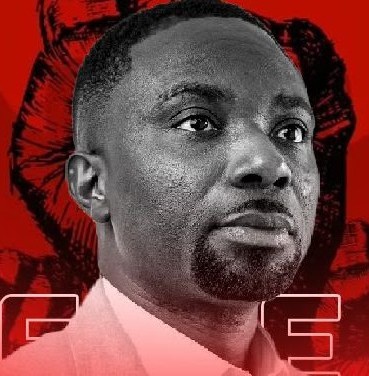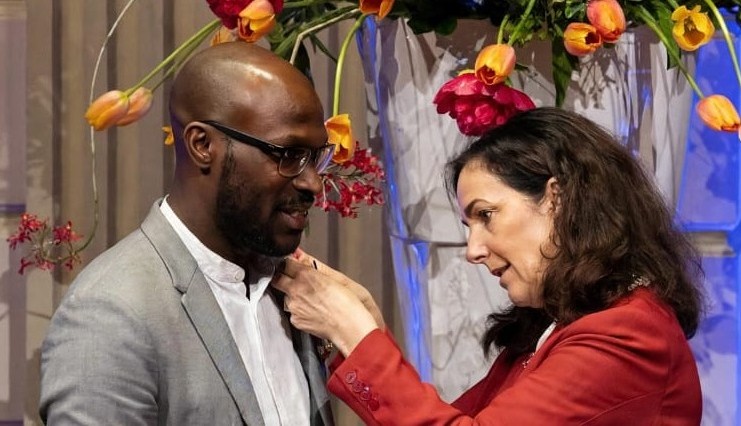
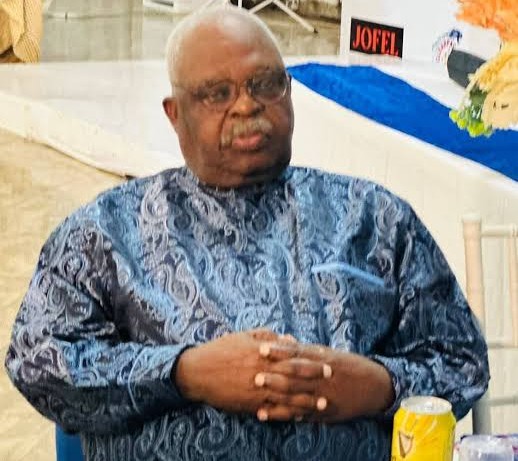
He rose from the sports desk to the commanding heights of Ghanaian media, transformed newsroom operations and now serves at the heart of Manhyia Palace. Kofi Badu’s extraordinary journey takes centre stage as the GJA honours him for a lifetime of service and leadership.
In Ghana’s media landscape, where careers are built on deadlines, editorial judgement and the relentless pursuit of news, few professional journeys span as many influential institutions as that of Kofi Badu. From the sports pages of the Daily Graphic to the executive corridors of Graphic Communications Group Limited and, ultimately, the inner administration of Manhyia Palace, Badu has carved out a career that bridges journalism, corporate leadership and traditional governance.
Now, the Ashanti Regional Branch of the Ghana Journalists Association (GJA) has placed that remarkable journey in the spotlight, conferring on him a Lifetime Contribution to Journalism and Media Leadership Award at the Ashanti GJA Media Excellence Awards in Kumasi on October 24, 2026.
The honour recognises more than longevity. It celebrates a professional who moved through the ranks of Ghanaian journalism, assumed leadership of one of the country’s major media organisations and subsequently took on a key administrative role at the palace of Asantehene Otumfuo Osei Tutu II.
Badu’s story began in the newsroom, where he worked as a sports writer at the Daily Graphic. Sports journalism demanded more than a knowledge of games and players; it required accuracy, speed, discipline and the ability to turn unfolding events into compelling stories. Those early years laid the foundation for a career that would extend well beyond the sports desk.
His subsequent move to the Ghanaian Times as an editor broadened his experience in newspaper journalism and editorial management. It was a significant stage in his professional development, strengthening his understanding of newsroom operations, editorial judgement and the responsibilities that come with shaping public information.
But Badu’s influence would reach its most consequential institutional level when he became Managing Director of Graphic Communications Group Limited. At the helm of one of Ghana’s leading media organisations, he operated at a critical point in the evolution of print journalism, when traditional production methods increasingly faced the demands of technological change.
His tenure was associated with efforts to modernise newsroom operations, including computerisation of news production and the introduction of more efficient editorial processes. Such changes were part of a broader transformation in newspaper publishing, helping prepare media operations for a rapidly changing professional environment.
For an industry in which technology continually reshapes how stories are gathered, edited and delivered, the modernisation of production systems was more than an administrative exercise. It was part of the difficult transition from established newspaper routines towards a more technologically enabled newsroom.
Yet Badu’s career did not end at the executive desk. His subsequent service as Chief of Staff at Manhyia Palace added another dimension to his public life, placing his organisational and leadership experience at the service of one of Ghana’s most revered traditional institutions.
Serving under Otumfuo Osei Tutu II, Badu moved from the world of media management into the demanding environment of palace administration. The transition underscores the breadth of his professional experience and the trust placed in him to serve in a position requiring coordination, discretion and institutional understanding.
His journey from journalism to traditional governance also offers a striking lesson in the transferability of professional skills. The ability to manage people, organise complex operations, communicate effectively and work within established institutions can extend far beyond the newsroom.
For the Ashanti Regional GJA, however, the significance of Badu’s career reaches beyond his individual accomplishments. His experience represents a bridge between generations of journalists at a time when the profession continues to confront technological disruption, changing audience expectations and the need to uphold professional standards.
Veteran journalists carry something that cannot easily be acquired from textbooks or digital platforms: institutional memory. Their experiences offer younger practitioners insights into newsroom discipline, editorial responsibility, professional growth and the often-unseen work required to sustain major media organisations.
By honouring Badu, the Association has highlighted the enduring value of experience and the importance of recognising professionals whose careers have helped shape Ghana’s media landscape.
The award is, therefore, both a tribute to an individual and a reminder of journalism’s wider contribution to national development. Media leadership is measured not only by the titles held, but also by the institutions served, the changes navigated, and the professional knowledge left for others to inherit.
From the sports pages of the Daily Graphic to the editorial leadership of the Ghanaian Times, from the executive corridors of Graphic Communications Group to the administrative responsibilities of Manhyia Palace, Kofi Badu’s career tells a story of professional evolution across distinct but interconnected worlds.
At the Ashanti GJA Media Excellence Awards, that journey received formal recognition. The Lifetime Contribution to Journalism and Media Leadership Award places his decades of service within Ghana’s continuing story of journalism, institutional development and public service.
For a man whose career has traversed the newsroom, the boardroom and the palace, the honour is a timely recognition of a life spent serving institutions and contributing to the country’s public life.
Story: Kakale Adams