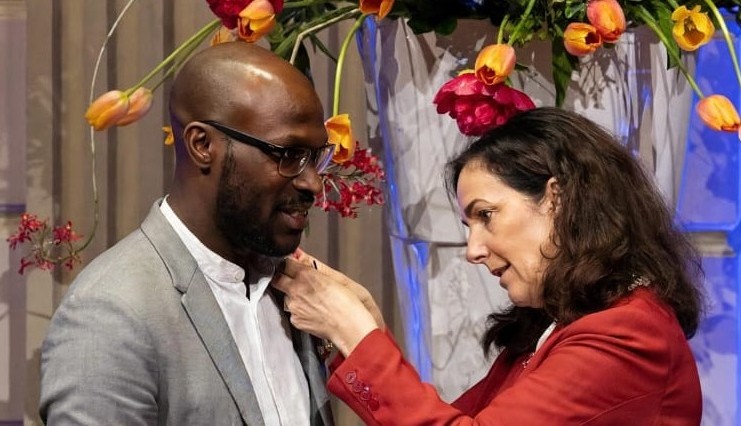
A powerful call for international Black solidarity has been issued following Mitchell Esajas’s decision to return his Dutch royal decoration, with Surinamese Columnist Kofi Dyompo Agyemang urging African leaders, diaspora communities and reparatory justice campaigners to stand firmly behind those challenging the historical legacy of colonialism.
In a strongly worded appeal, Agyemang describes Esajas’s action as a matter of principle rather than provocation, arguing that the controversy surrounding the returned honour raises broader questions about colonial history, institutional accountability and whether symbolic recognition can substitute for meaningful reparations.
“This is not only about Mitchell. This is about all of us,” Agyemang declares, extending his appeal from Suriname and the Caribbean to Africa and Black communities across Europe and North America.
At the heart of his intervention is a demand for greater accountability in addressing the historical injustices of slavery and colonialism. He questions the adequacy of investigations, apologies and official gestures that, in his view, have failed to deliver the truth, justice and material redress sought by affected communities.
The columnist’s message is particularly directed at members of the African and Caribbean diaspora whom he challenges to examine whether their activism is producing meaningful change or merely securing recognition within institutions they seek to reform.
His argument is uncompromising: honours and decorations cannot, by themselves, settle the historical questions of exploitation, racial inequality and the enduring consequences of colonial rule. For Agyemang, genuine reconciliation requires more than ceremony; it demands honesty, accountability and concrete action.
He also invokes African ancestral heritage, urging Black communities to reject narratives that reduce them to historical victims and instead draw strength from their cultural inheritance, dignity and collective aspirations.
Agyemang’s appeal reaches the highest levels of African political leadership. He calls on Burkina Faso’s President, Captain Ibrahim Traoré, to use his country’s revolutionary credentials to support international efforts for reparatory justice and raise the issue within African continental institutions.
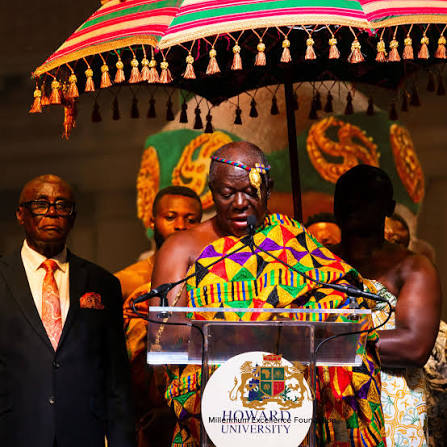
He makes a parallel appeal to Ghana and its historic role in Pan-Africanism.
Ghana, he argues, has a particular responsibility to help amplify the concerns of Africans and people of African descent seeking historical truth, recognition and reparations.
The appeal also carries a pointed message for those who claim to represent Black interests: solidarity, Agyemang insists, must be demonstrated through action, particularly when principled campaigners face criticism for challenging established institutions.
His closing declaration is both a message of encouragement to Esajas and a rallying cry to the wider diaspora: “We will not let you fall.”
For Agyemang, the controversy is therefore bigger than one man or one returned decoration. It represents a wider struggle over who controls the narrative of colonial history, what genuine accountability should look like, and whether Black communities across continents can unite around a common demand for justice.
His ultimate message is clear: dignity cannot be purchased with honours, historical truth cannot be replaced by symbolism, and the pursuit of reparations requires sustained international solidarity.
As debates over colonial legacies and reparatory justice continue to shape relations between Europe, Africa and the Caribbean, Agyemang wants the response to Esajas’s decision to become a catalyst for a broader conversation; one that moves beyond declarations of sympathy towards coordinated action.
For the columnist, the stakes extend to future generations. The question, he argues, is whether today’s leaders and activists will confront difficult historical truths or leave the next generation to inherit unresolved injustices.
His final appeal is rooted in a simple principle: Black solidarity must mean more than words when those who challenge the status quo come under pressure.
Story: Lawal Mohammed