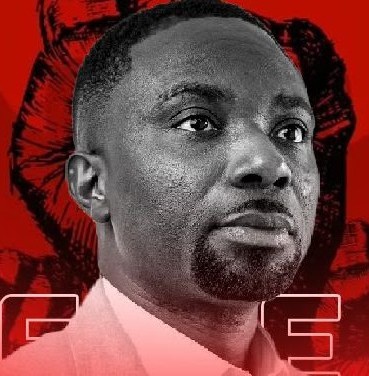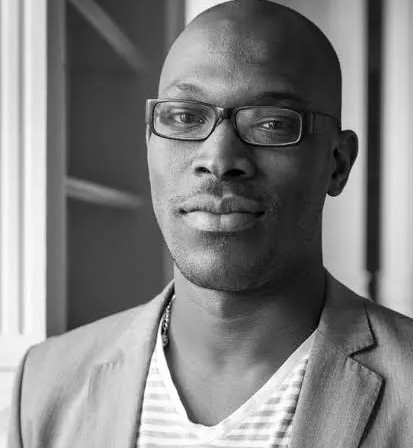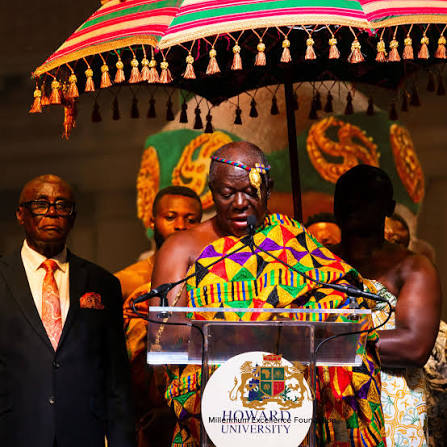
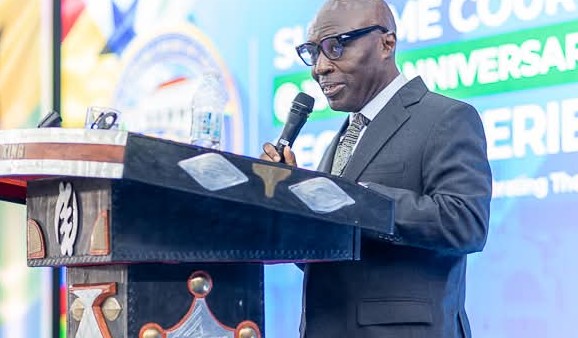
The commemoration of the 150th anniversary of Ghana’s Supreme Court has reignited scholarly debate on the relationship between constitutional governance and indigenous political institutions, following a thought-provoking lecture by historian and Director of the Manhyia Palace Museum, Ivor Agyeman-Duah.
Speaking on the theme “The Supreme Court and the Institution of Chieftaincy,” Agyeman-Duah argued that Ghana’s legal evolution cannot be fully understood without recognising the enduring contribution of customary law and traditional leadership to the country’s constitutional development.
Positioning himself as a contemporary historian rather than a legal scholar, Agyeman-Duah traced the historical foundations of law in Ghana to indigenous systems that predated colonial rule by several centuries. He maintained that long before the establishment of British legal institutions, societies across the Akan forest states, the northern savannah and the coastal communities had developed sophisticated systems of governance, social regulation and dispute resolution rooted in custom, memory and communal obligations. According to him, colonial legal structures were introduced into societies that already possessed functioning jurisprudential traditions.
The historian situated the establishment of the Supreme Court in 1876 within the broader context of British colonial expansion, observing that the court emerged during a period of widespread resistance to colonial ordinances, trade regulations and land acquisition policies. He argued that early perceptions of the colonial judiciary were shaped by its association with imperial authority rather than impartial justice, resulting in decades of distrust among several traditional states, particularly Asante.
A significant portion of the lecture highlighted the role of African legal pioneers who gradually bridged the divide between customary authority and the imported judicial system. Agyeman-Duah cited figures such as Kofi Asaam, J.E. Casely-Hayford, Sir Edward Asafu-Adjaye, Sir Samuel Okai Quarshie-Idun, Victor Owusu and Joe Appiah, arguing that their legal advocacy helped build confidence in the courts while simultaneously defending indigenous political institutions and customary rights. Their contributions, he suggested, transformed the judiciary from an instrument of colonial administration into an increasingly legitimate national institution.
Turning to pre-colonial constitutional thought, Agyeman-Duah challenged the notion that African governance lacked organised legal frameworks before European intervention. He referenced the constitutional innovations associated with Osei Tutu I and Komfo Anokye, including the celebrated corpus of customary laws that governed Asante statehood, family relations, inheritance, land tenure and political authority. These institutions, he argued, illustrate that constitutionalism in Ghana has indigenous roots extending well beyond the colonial period.
The lecture further contended that Ghana’s 1992 Constitution represents a synthesis rather than a rejection of traditional governance. Agyeman-Duah noted that the framers of the Constitution consciously incorporated principles of chieftaincy into the country’s democratic framework and that several traditional rulers played influential roles during the constitutional drafting process. He also credited the Supreme Court with safeguarding constitutional stability during politically sensitive presidential election disputes, thereby strengthening democratic governance over the past three decades.
Expanding his historical analysis, the speaker linked Ghana’s constitutional development to wider Pan-African intellectual movements. He argued that legal scholarship and constitutional thinking featured prominently in the struggle for African independence, pointing to the participation of lawyers and future political leaders—including Kwame Nkrumah, Julius Nyerere, Jomo Kenyatta and others—at the Fifth Pan-African Congress in Manchester in 1945. According to Agyeman-Duah, the transition from colonial rule to political independence demanded not only political liberation but also the redesign of legal systems governing land, natural resources and economic development.
Reflecting on Ghana’s constitutional history, Agyeman-Duah warned that judicial independence has repeatedly faced political pressures. He revisited landmark constitutional episodes, including the Re: Akoto case, the removal of Chief Justice Sir Arku Korsah and the tragic murder of three High Court judges and a retired army officer in 1982. These events, he argued, continue to challenge contemporary understandings of judicial independence, accountability and the rule of law, leaving society with the enduring question of whether true freedom can exist without impartial justice.
A central proposition of the lecture was that modern judicial institutions and traditional authorities should be viewed as complementary rather than competing systems. Agyeman-Duah cited the successful mediation of the Dagbon and Bawku conflicts under the leadership of the Asantehene as evidence that collaboration between customary authority and constitutional institutions can produce durable peace. He further drew parallels with Rwanda’s Gacaca Courts, arguing that indigenous mechanisms of reconciliation remain relevant for contemporary governance and post-conflict resolution across Africa.
Historian Agyeman-Duah urged Ghana’s judiciary to preserve the values of integrity, courage and constitutional fidelity that have shaped its 150-year journey. Employing the Akan proverb, “Hu n’ani so ma me nti na atwee mmienu nam” (“Antelopes walk in pairs so one may rescue the other in times of danger”), he called for stronger collaboration between the bench, traditional institutions and society in advancing justice, national cohesion and democratic governance.
His lecture ultimately presented Ghana’s legal history as a story of convergence between indigenous constitutional traditions and modern judicial practice, offering a framework for future scholarship on the interaction between law, culture and state formation.
Story: Lawal Mohammed