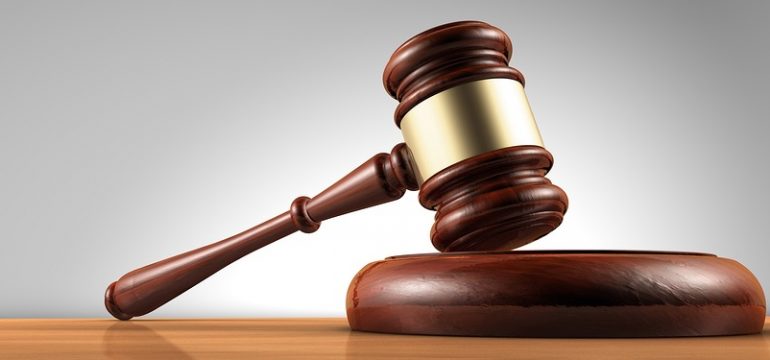
In an era where public trust in leadership is steadily eroding, a remarkable experiment is unfolding in Wales. The Welsh Parliament has taken the first legislative steps toward making it a criminal offence for politicians to deliberately lie during election campaigns. If enacted fully, this would mark a historic first—no country has yet codified political dishonesty in this way.
At first glance, the idea appears both simple and compelling. In most professions, truth is not optional. Doctors who falsify information risk losing their licenses; lawyers who mislead face disbarment. Yet in politics, where decisions often carry far greater consequences, misleading statements have traditionally attracted little more than public criticism or electoral consequences—if any. Wales is now asking a profound question: should politics be held to the same standard of truth as other professions?
The Principle: Trust and Accountability
The driving force behind the Welsh proposal is the belief that democracy depends fundamentally on trust. When citizens cannot rely on the accuracy of statements made during campaigns, informed decision-making becomes impossible. The proposed law seeks to establish a clear boundary: not all political speech must be perfect, but deliberate falsehoods—especially those intended to influence voters—should carry consequences.
This is not about punishing opinion, rhetoric, or even failed promises. Rather, it targets a narrow category of conduct: knowingly making false, verifiable claims.
Defining a “Lie”: The Core Intricacy
One of the greatest challenges lies in definition. For a statement to be criminal under such a law, it would likely need to meet three strict criteria:
– It must be a factual claim, not an opinion or interpretation
– It must be demonstrably false
– It must be made with intent to deceive
This distinction is crucial. Politics is filled with ambiguity, projections, and differing interpretations of reality. A statement such as “the economy is doing well” cannot be objectively criminalised. However, a claim like “inflation is 5%” when official data clearly shows otherwise—and when the speaker knows this—falls into a different category altogether.
The Burden of Proof: Intent Matters
Perhaps the most difficult element to establish is intent. It is not enough to prove that a statement is false; one must show that the politician knew it was false or recklessly disregarded the truth.
This requires evidence—documents, briefings, emails, or testimony—demonstrating prior knowledge. Without such proof, even highly misleading statements may escape legal sanction. In practice, this sets a high threshold, ensuring that only the most clear-cut cases of deception are likely to succeed in court.
Enforcement: Who Decides the Truth?
Another critical question is institutional. Who determines whether a lie has been told?
The process would likely involve an independent body—perhaps an electoral commission—followed by judicial review. The courts, not political actors, would have the final say. This separation is essential. Without it, the law risks becoming a tool for partisan retaliation rather than a safeguard of integrity.
However, this also introduces complexity. Courts are designed to interpret law, not arbitrate political narratives. Translating campaign speech into legal evidence is no small task.
*Safeguards: Protecting Democratic Debate
* Critics of the proposal raise a valid concern: could such a law chill free speech?
To address this, robust safeguards are necessary. These would include:
– A high standard of proof
– Protection for honest mistakes and outdated information
– Clear separation between fact and opinion
Without these protections, politicians might avoid making bold or innovative claims altogether, fearing legal repercussions. A democracy thrives on open debate; any attempt to regulate truth must not suffocate it.
Practical Limitations: What the Law Can—and Cannot—Do
Even if successfully implemented, the law is unlikely to eliminate dishonesty in politics. Most political communication does not consist of outright lies, but rather:
– Selective presentation of facts
– Exaggeration
– Interpretation
These fall outside the reach of legal sanction. The Welsh model would instead focus on the most egregious cases—fabrications, invented statistics, or knowingly false accusations.
In this sense, the law is less a sweeping reform and more a line in the sand: some conduct is unacceptable, regardless of political context.
Broader Implications: A Global Test Case
Wales’ initiative is being closely watched because it touches on a universal tension within democratic systems: the balance between accountability and freedom.
Too little accountability, and public trust collapses.
Too much restriction, and open debate is endangered.
Whether this law succeeds will depend not only on its wording, but on the strength and independence of the institutions that enforce it. In countries with robust judicial systems, such a measure could enhance democratic integrity. In weaker systems, it risks misuse.
Conclusion: Law or Culture?
Ultimately, the Welsh experiment raises a deeper question that extends beyond legislation:
Can honesty be enforced by law, or must it be cultivated by culture?
Legal frameworks can deter the most blatant forms of deception, but they cannot replace the need for informed citizens, vigilant media, and ethical leadership. The strength of any democracy lies not only in its rules, but in the values of those who operate within them.
Wales has taken a bold first step. Whether it becomes a model for others—or a cautionary tale—will depend on how well it navigates the delicate boundary between truth and freedom.
Story: Colonel Augustine Ansu Rtd