
THE SACRIFICE
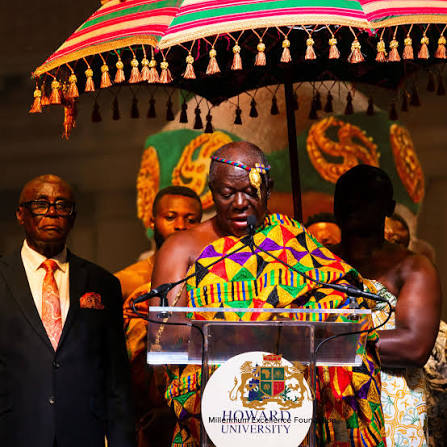
On 12th January, 1961, Asanteman and the new Republic of Ghana woke up to the most shocking news, that Otumfuo Sir Osei Agyemang Prempeh II had abolished the Okyeame stool of Bafour Osei Akoto, the Butuakwa Appiah stool.
Bafour Akoto, ex National Chairman and Founder of the defunct National Liberation Movement (NLM) and a Senior Linguist of the Asantehene was then in Nsawam Prisons, having served three years already under the Preventive Detention Act (PDA).
In his statement, read on national radio and published in the print media, Otumfuo singled out Bafour Akoto as the chief instigator of the instability and violence that had plagued Asante, in particular and the Gold Coast, in general, from 1954 to 1956.
Without his knowledge, consent and subsequent support, Otumfuo said, Bafour Akoto had gone on to organise the young men, lead them to the sacred Subin River and had caused a sheep to be sacrificed, thereby ushering in the NLM. The nation would know no peace then as a result of Akoto’s action.
To reinforce his justification of the abolition, Otumfuo turned to history. Akoto’ Stool, the statement read, was created by Prempeh’s great-grand-uncle, Otumfuo Osei Bonsu Panin. Butuakwa, ( -Akoto’s great- grand-uncle-a wealthy merchant,) had successfully negotiated a peace treaty between King Adinkra of Gyaman and Otumfuo.
The Gyamanhene had made himself a Golden Stool, an idea sacrilegious to Asanteman.
Before war could break out, Butuakwa convinced Adinkra to turn over the stool-himself being the bearer- to Bonsu Panin.
Bonsu Panin rewarded Butuakwa with a linguist stool-highlighting his diplomatic and negotiation skills-circa 1810s.
But since then, the statement continued, the successors of Butuakwa had been the cause of all great upheavals in Asanteman.
That Akoto’s great uncle, Okyeame Dwubin, was the brain behind the three year civil war which engulfed Asanteman during the enstoolment of Prempeh I- in the 1880s.
That Akoto’s predecessor, Appiah, misrepresented facts which led to the Nkoranza War in 1893.
And lo and behold, Akoto, another Butuakwa occupant, was the cause behind the recent near civil war crisis.
Therefore, to save Asanteman and Ghana as a whole from such future effects, the Butuakwa Stool was abolished, concluded the statement.
UNITED PARTY RESPONSE
That the nation and Asanteman, specifically, was dumbfounded by Otumfuo’s statement is an understatement.
The mood in the nation was perfectly summed up in a seven page booklet issued by the United Party (UP) under the leadership of JB Danquah, Busia and Dombo titled, “In Defense of Justice and Bafour Akoto”-JB would come to the defence of Akoto, again, in the famous Re “Akoto” case a few years later.
Here, I would add, that in my opinion, the booklet was a little bit harsh in tone on Otumfuo, respectfully. But I am judging with the benefit of hindsight here. Again who could fault a Party which at that time had most of its leaders in jail, dead or in exile!
After expressing its “indignation,” the booklet provided numerous quotes of Otumfuo, from newspapers and other literature, which sought to show, that the King had been well aware of, supported and had inspired Akoto and the NLM from the very start till the end-notably among literature referenced was the Sarkodie Commission of 1958.
“People should not think that by supporting NLM, they were supporting NLM; or supporting Bafour Akoto or any other person. They are performing their duty to the Asante nation.”
After the first NLM electoral victory over CPP at Atwima-Nwabiagya by-elections:
“NLM must forge ahead and organize. But this needs funds. ‘OUR’ performance in this election was due to your support.”
“Our” highlighted by the booklet.
Meeting with Zongo chiefs:
“I called you here today to declare to you the Asanteman Council stands in demand of a Federal system for the Gold Coast. You are strangers sojourning in our midst; I have observed your demeanour in the present crisis and I have satisfied myself that you give ‘MY’ movement your unshaken support.”
Again ‘MY’ in bold capital letters in the booklet.
The booklet concluded by exhorting Akoto to:
“Stay well, for the innate sense of Justice and fair play of your fellow citizens will acquit you of this charge which, coming from the master you served so well, must be the unkindest cut of all; but we are left with a moral for all to profit from.”
Well, Akoto was in Nswaman then and could not hear the defense nor the exhortation. In fact Akoto would not hear of the abolition until a year later in 62-slow news for condemned cells inmates.
REDEMPTION
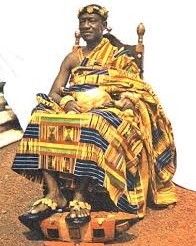
28th November, 1966. Nine months after the 24th February Coup. Manhyia Palace. 12:20pm. Asanteman has gathered. Nkrumah is no more. Inmates of Nsawam under PDA are free. And Otumfuo addresses the State.
The gathering is necessary because it is the reinstatement and reenstoolment of Bafour Akoto and the restoration of the Butuaka Stool to its rigthful place at his right side, Otumfuo began.
Many had wondered why he had been so ruthless as to abolish Akoto’s stool while he was in prison 5 years ago.
He had no choice, the King said. An ultimatum had been delivered by the deposed President to this effect: abolish Akoto’s stool or risk detainment.
Otumfuo briefly recalled the oppressive state of the nation in which everything was all CPP or nothing.
As Nkrumah was all omnipresent and could do all things except “changing a man into a woman and a woman into a man,” he was faced with no choice but to sacrifice Akoto to save the Asante State and the nation at large. It was Akoto or War.
Otumfuo continued:
“Since I had no alternative in my capacity as such, all that I had to do was to conform to the rules of Asante Tradition by making Akoto a sacrificial victim in order to save the dignity and prestige of the Asante Nation.”
But in truth, he did not really abolish the stool, said the King. Otherwise Akoto’s re-enstoolment would not have been possible.
To legally abolish a stool in Asante custom, the black stools of the house would have to be destroyed.
But he had done nothing of the sort to Akoto’s ancestral black stools after verbally abolishing the stool in public. He had left the stool house alone and had merely transferred its duties to the “Stool sister”-“deputy Okyeame.
The King did not imply but the implication was very clear. The deposed president had been subtly outmanoeuvred.
But those were the days when the skies were dark, Said the King. But the dark skies were no more.
Akoto had served him and Asanteman faithfully for 27 years prior to his imprisonment.
The time therefore was ripe for reenstoolment if there existed no objections.
Before concluding his statement, however, the King touched on one more issue.
He had not bestowed the title “Osagyefo” nor “Katamantso” on Nkrumah.
The deposed president had adopted the titles himself-obviously clueless.
Only Osei Tutu-Opemso had the right to the title, Osagyefo, because of Feyiase, continued the King, while Katamantso was reserved for Bremanhene, in charge of the Royal Mausoleum.

Last but not the least, Akoto’s stool had been elevated, Otumfuo concluded.
Though still an Okyeame Stool, the occupants of the Butuakwa Stool, henceforth, would swear the oath of allegiance with the Mponponsuo, the sword reserved for paramountcies, including Otumfuo himself as Kumasihene- and abrempong.
With one stroke, both Otumfuo and Akoto had been redeemed.
Akoto, after 8 years in detention, drew the Mponponsuo that fateful afternoon, swore the Oath once again and would go on to serve Asanteman and Ghana for 46 more years-till 2002.
AFTERTHOUGHT
Why and how did Nkrumah fall for the verbal abolition of Akoto’s stool? Due to his ignorance of Asante-Akan-customs?
And in the first place, why did Nkrumah go all the way to administer an unnecessary coup de grace when Akoto was already out of the way? To break his spirit in Nsawam?
Or was it an attempt to test the resolve of Otumfuo or humble Asanteman? After all, Okyehene, Ofori Atta II had been escorted by 100 policemen from Kibi to Accra, placed under house arrest and destooled by Nkrumah.
Most important. What was Nkrumah’s true motive in pushing the nation to the brink of a civil war with the abolition ultimatum?
A “warlove” like Kofi Karikari might not have backed down!
Author: A. A. Afrifa Akoto (A4)