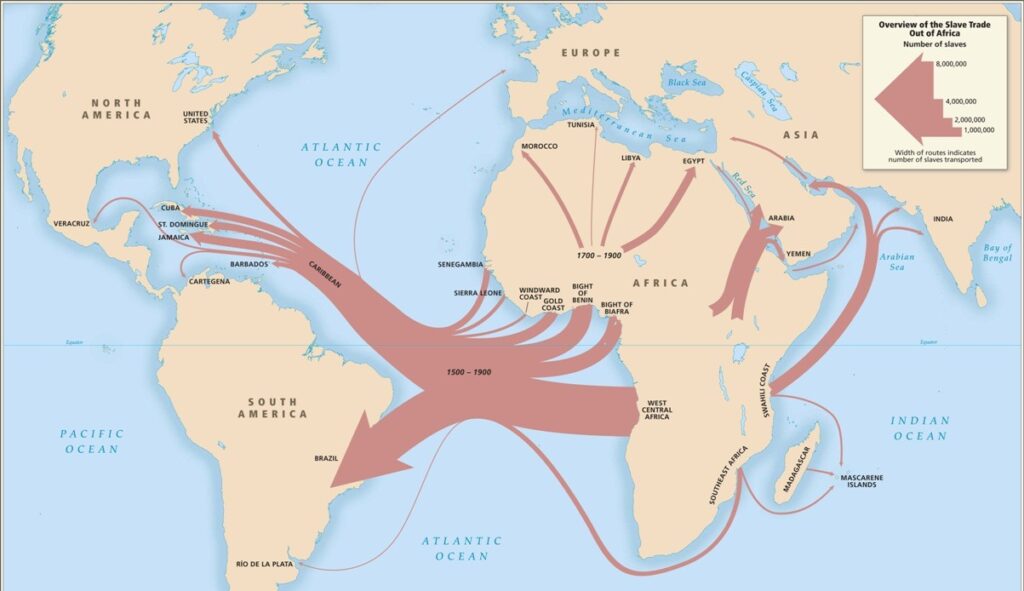
YP1 001 Slave Trade Overview.eps
The recent resolution championed by H.E. John Dramani Mahama on compensation for the transatlantic slave trade has given fresh impetus to a long-standing global debate—one that lies at the intersection of history, morality, law, and practical governance.
At the United Nations General Assembly, in a significant diplomatic move led by Ghana, member states adopted a resolution declaring the Transatlantic Slave Trade a “crime against humanity.” The resolution, supported by 123 countries, with three opposing and 53 abstaining, marks a notable moment in international diplomacy and reflects growing global momentum toward addressing historical injustices and their enduring legacies.
At the heart of this issue lies the scale, duration, and cruelty of that trade—a brutal enterprise that spanned over four centuries (15th to 19th century), during which an estimated 12 to 15 million Africans were forcibly uprooted from their homelands, with millions more dying in raids, forced marches, and coastal dungeons before ever reaching the ships. Those who survived were transported across the Atlantic in conditions so inhumane that they were tightly packed below deck—chained, starved, and deprived of dignity—leading to disease, suffocation, and high mortality rates during the dreaded Middle Passage. Families were torn apart, communities shattered, and generations erased, while survivors endured relentless labour, cruelty, and the total denial of their humanity and rights. This was not merely exploitation, but a sustained and systematic assault on human life whose consequences still reverberate across continents.
The resolution acknowledges the lasting impact of slavery on African nations and the diaspora—manifested in systemic inequalities, racial discrimination, and developmental deficits. It calls on former slave-trading nations to engage in meaningful dialogue with African states and the African Union, opening the door to possible remedies such as financial compensation, debt cancellation, development assistance, and the return of looted cultural artefacts.
Yet, while the moral and historical case grows stronger, the practical realities remain complex.
First is the question of responsibility. Can present-day citizens of countries such as the United States or United Kingdom be held accountable for actions committed centuries ago? Many argue they neither participated in nor directly benefited from slavery, raising difficult questions about intergenerational responsibility.
Equally challenging is the issue of entitlement. Who precisely should receive reparations? Descendants of enslaved Africans in the diaspora, or African states themselves? The passage of time has blurred identities and boundaries, complicating clear and universally accepted claims.
Legally, the difficulty is even more pronounced. International law is not easily applied to events so distant in time, particularly where direct victims and perpetrators are no longer identifiable. Unlike more recent injustices—such as the Holocaust or the Japanese American internment—the transatlantic slave trade spans centuries and continents, making direct compensation exceedingly difficult to implement.
Nevertheless, the resolution represents a turning point. It does not impose immediate financial obligations, but it strengthens the moral and diplomatic foundation for reparative justice. More importantly, it shifts the conversation from whether the injustice occurred to how its consequences should be addressed.
In this light, a more pragmatic path is emerging—one that emphasises structural and forward-looking remedies. Debt relief, targeted development financing, educational opportunities, technology transfer, and formal acknowledgement of wrongdoing offer more feasible and sustainable avenues for redress, without entangling nations in an endless cycle of claims.
In assessing the feasibility of reparations, one must therefore adopt a balanced view. Full-scale financial compensation across generations remains unlikely, given the legal, political, and logistical complexities involved. However, the broader pursuit of justice—through recognition, reform, and meaningful support—is both possible and increasingly gaining international backing.
In the final analysis, the question is no longer simply whether reparations can be paid, but whether the world is prepared to act on the moral weight of history. With the voice of the United Nations General Assembly now echoing that call, justice—though long delayed—may yet find a path toward meaningful expression
Author: Colonel Augustine Ansu Rtd