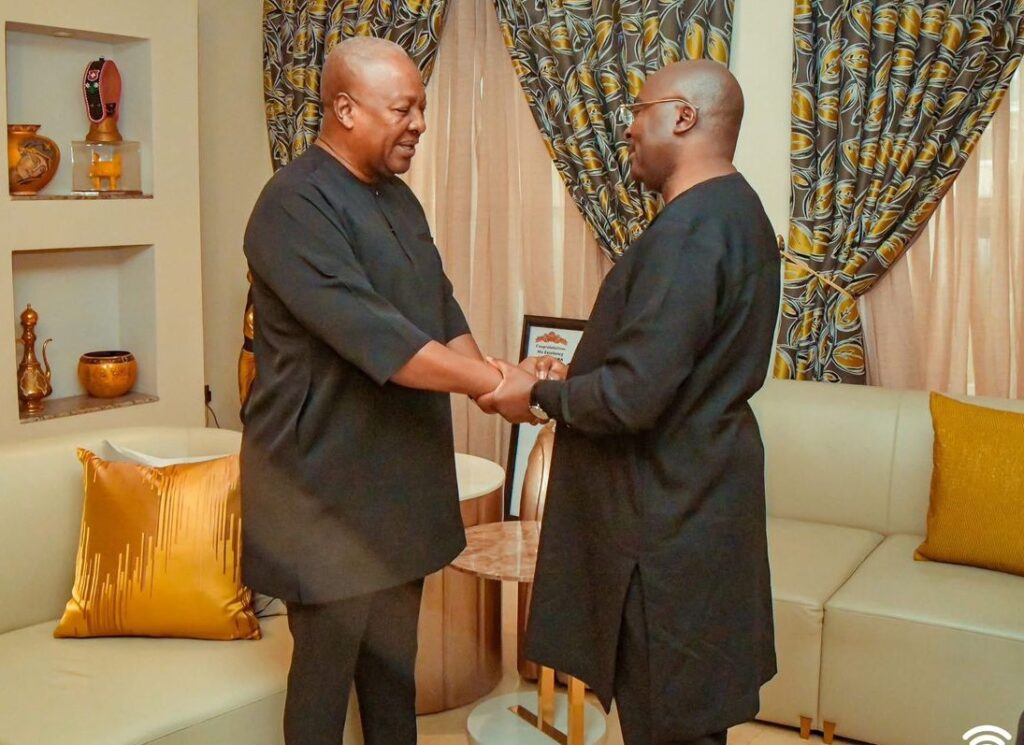
In a poignant demonstration of unity amidst sorrow, former Vice-President Dr Mahamudu Bawumia paid a personal visit to President John Dramani Mahama at his residence on August 9, 2025, offering condolences as Ghana grapples with the recent loss of distinguished citizens.
The meeting, conducted in a quiet, solemn atmosphere, went beyond the customary protocols of political courtesy. It carried symbolic weight in a country where political competition often overshadows personal connections. For observers, the moment recalled a long-standing tradition in Ghanaian political culture: leaders setting aside partisan divisions in times of grief to embody a shared national identity.
Following his visit to President Mahama, Dr Bawumia proceeded to the home of the late Dr Edward Omane Boamah, former Minister of Communications; where he extended his sympathies directly to the bereaved family.
Dr Bawumia spoke briefly, invoking divine comfort for those affected, noting, “May God, the Almighty, comfort the bereaved families.”
For scholars of political behaviour, such acts are more than ceremonial gestures; they are public rituals that reaffirm the resilience of Ghana’s democratic ethos. In moments of collective mourning, leaders’ physical presence and words of compassion serve as political symbols, reinforcing the notion that governance is rooted not only in policy but also in shared humanity.
Story: Lawal Mohammed