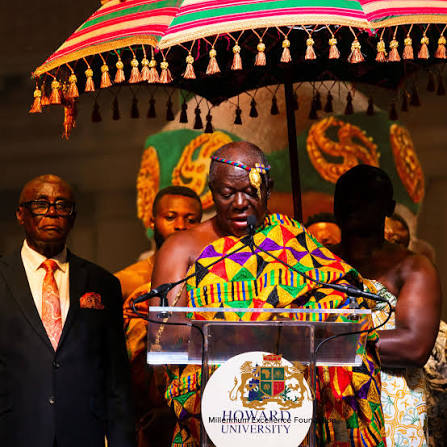

When the Asantehene is present, it signals that the event touches the soul of Asanteman.
The unprecedented crowd at the burial ceremony of the occupant of the Silver Stool of Asante, especially with the Asantehene in attendance, is a powerful testament to deep cultural, historical, and symbolic factors that resonate strongly with the Asante people and beyond. Here’s a breakdown of what motivates such a mammoth gathering:
- Cultural Reverence and Traditional Authority
The Silver Stool is not just any chieftaincy position — it is part of the sacred hierarchy of the Asante traditional governance system.
The occupant is usually a significant royal figure (often a paramount chief or close relative of the Asantehene), and their funeral is therefore a major cultural rite.
In Asante tradition, funerals are not merely mourning events — they are moments of homag, history, and reaffirmation of identity.
- Presence of the Asantehene (Otumfuo Osei Tutu II)
The Asantehene is the embodiment of Asante unity, continuity, and identity.
His presence at an event elevates its importance exponentially, drawing chiefs, royals, citizens, politicians, scholars, and curious observers.
People travel from far and near simply to catch a glimpse of the Asantehene or to feel part of a historic moment.
- Public Display of Royal Pageantry
These funerals involve elaborate rituals, kente/ regalia, talking drums, horns, guns firing, and traditional dirges — a display of rich Akan heritage that fascinates both locals and outsiders.
The symbolism of stools, swords, umbrellas, and the structured entry of sub-chiefs create an unforgettable visual and emotional experience.
- Historical Significance
Funerals of stool occupants are moments of historical transition.
Attending is a way to witness history unfold, to honour ancestors, and to reaffirm social bonds within the Asante kingdom.
These events often bring together members of the diaspora, historians, and dignitaries.
- Spiritual and Communal Responsibility
In Asante belief, the dead are not gone but transitioned to the ancestral world.
Attending such funerals is a way to pay spiritual dues, show respect to the ancestors, and fulfill communal expectations.
Chiefs, family heads, and even commoners feel an obligation to be present.
- Social Status and Networking
Such a high-profile funeral becomes a gathering of the elite — from government officials to celebrities, clergy, and traditional rulers.
It becomes a stage for social reconnections, affirming loyalty, and gaining visibility within Asanteman.
- Curiosity and Collective Identity
Many people attend simply out of curiosity and a desire to be part of something bigger.
In a society with deep oral traditions, being physically present allows one to say, “I was there.”
It reinforces Asante pride and collective consciousness
In short, when the Asantehene is present, it signals that the event touches the soul of Asanteman — heritage, unity, ancestry, and sacred tradition converge.
*Written by an observer at the burial ceremony.