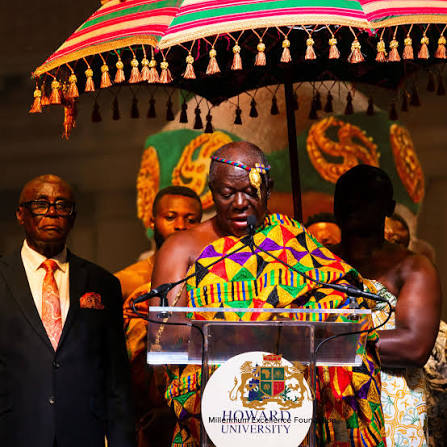

“We must be vigilant against those who value ostentatious wealth over the well-being of our communities and future generations.”
In a time when globalization threatens to erode the roots of indigenous identity, Osabarima Kwaku Adu stands as a beacon of cultural resurgence in Africa. With a powerful voice and a visionary spirit, he is championing a movement to reclaim, revive, and celebrate the rich heritage of the continent. His mission goes beyond mere tradition—it is a call to awaken the ancestral wisdom, languages, art, and values that have long been overshadowed by foreign dominance.
According to Osabarima Kwaku Adu, Chief Executive Officer of the Holland-based Black Restoration Foundation, “Africa is experiencing an exciting cultural revolution, unfolding in three dynamic phases: Political, Economic, and Spiritual. Each phase is reshaping the continent, igniting new ideas, and inspiring a vibrant transformation that echoes across communities and generations. This is a powerful journey of evolution and empowerment, where the spirit of change is alive and thriving.”
To him, politically, the Black man is aware of both the necessary and unnecessary political strategies that shape life, whether for better or worse. This time, Black individuals at home and abroad are awake and actively fighting to achieve meaningful goals. Although obstacles designed to hinder their progress remain, they are being confronted with resilience, even as those in power resist granting true freedom.
“We remain confident that we will eventually triumph over evil. Regardless of whether under democratic or military rule, the Black community is considering how to define and implement an African-centered approach to democracy that respects our cultural and traditional systems, much like it was before the arrival of the Arabs and Europeans,” he says.
Economically, Osabarima Kwaku Adu says the Black man is fully aware of the excessive costs attached to even the slightest assistance from abroad, and of the manipulative narrative pushed by oppressors who want the Black man to believe that he is ignorant of how the world truly operates.
“The refusal to engage with the Black man as an equal in global discussions about the welfare of this planet must be left in the past—because the Black man now understands all that unfolds under the sun,” he asserts.
Spiritually, he emphasises that the Black revolution is critically examining the imposition of Western ideologies and religious indoctrinations, aiming to liberate our minds from all forms of mental slavery. The deliberate agenda to make the Black man forget himself on Earth while focusing solely on building a life after death is now under serious scrutiny.
To him, the success of the African Cultural Revolution depends on the collective responsibility of Africans.
“We must foster mutual respect and prioritize the sustainable use of our natural resources to meet our fundamental needs: food, clothing, and shelter. The destruction of our natural heritage in pursuit of temporary financial gain will ultimately lead to our downfall. We must be vigilant against those who value ostentatious wealth over the well-being of our communities and future generations,” Osabarima Kwaku Adu says.
Story: Lawal Mohammed