“What endeared him most to music lovers was his desire to entertain his fans by honouring all manner of programmes”.
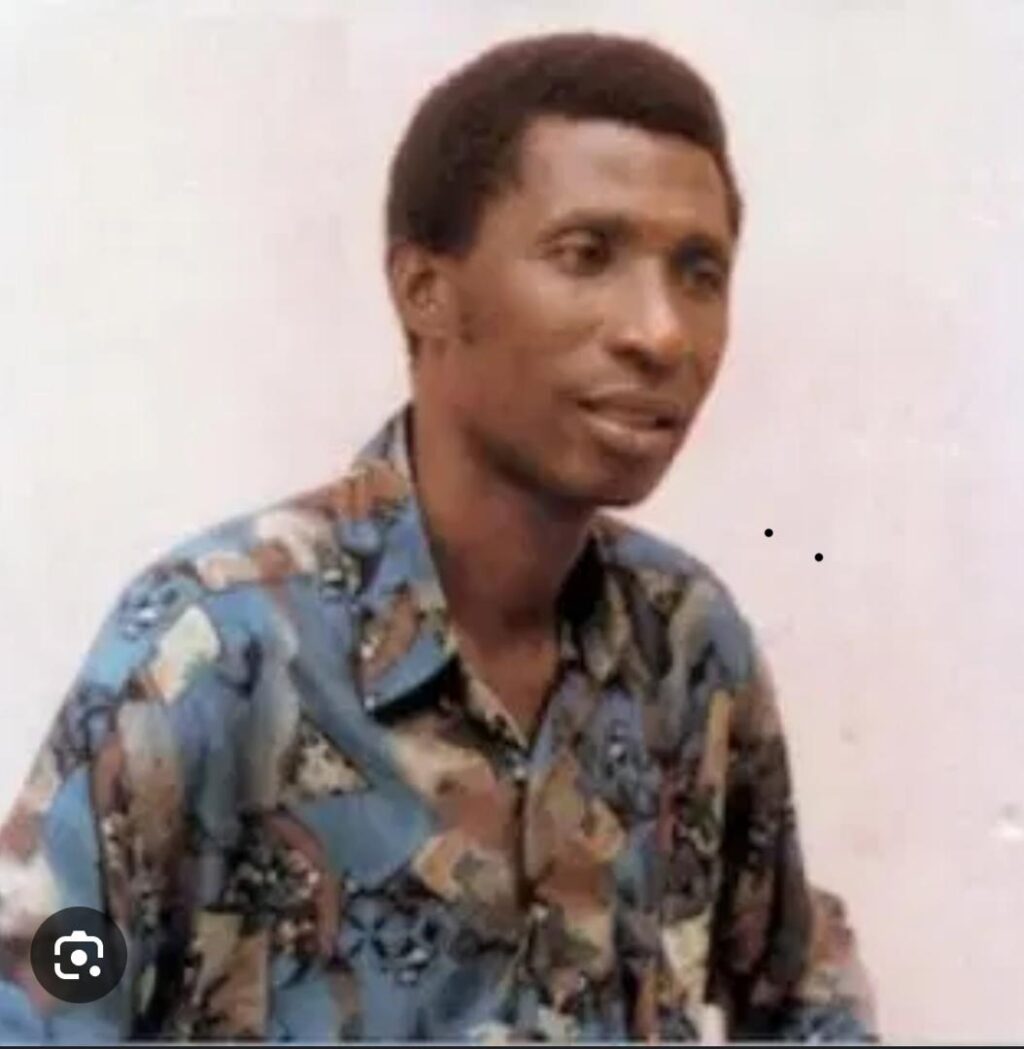
Alex Konadu, aka “One Man Thousand” or “Tafo James Brown” was one of Ghana`s original roots highlife Kings who never, never disappointed, quite creative and a crowd puller.
Alexander Kwabena Konadu (1948 – 18 January 2011) was a popular pioneer Highlife icon, skillful guitarist and one of the original innovators of Highlife genre. He won the accolade “King of Ghanaian guitar highlife,” a title which he unofficially inherited after the death of EK Nyame. Konadu was also one of the few Ghanaian musicians who was a purist in his music, as he consciously avoided newer blended musical influences such as Afrobeat, but persisted in singing in the native Asante Twi dialect of the larger Akan language.
Konadu was quite famous on the local highlife scene, and his popularity earned him the nickname, “One Man Thousand”. He was “One Man Thousand” because of his ability to draw crowds wherever he appeared, and it is rumored by his fans that he performed in every single town and village in Ghana. He was well known for his classic all-time song “Asaase Asa,” from the 1976 album by the same name, which details a tragedy that befalls a man, killing his wife and sister. The song still has currency, and is dedicated to all those that have lost loved ones, and consequently, it`s a “must-play at any Ghanaian funerary”(ICACA AfricaSankofa, 2011). He was one of the early highlife artistes to record a live international album. Many of his fans preferred his live songs over the recorded songs in the album because of the energy and creativity that comes with it. Apart from his live album in London, he also had some live recordings in Canada. The core members of his band include vocals – Collins Marfo, Barfo Kyei lead guitar – Collins Marfo guitar – Elder Osei Bonsu bass guitar – Maringe organ – Kwadwo Akwaboa Junior maracas – Kadido drums – Yaw Donkor conga – K. Tawia.
Alex Konadu, a talented man of Asante ethnicity was born in 1950 at Adwumakase Kese in the Kwabre No.3 District of Ashanti Region of Ghana. He started his basic school education at his hometown, Adwumakase Kese, and started singing at an early age whilst in school. However, because his age disqualified him from joining any band, Konadu learnt to manipulate some of the musical instruments and never missed watching the concert parties and dance bands which visited his town to perform at the time. After completion of his elementary education in 1967, he refused to pursue further education but took a detour to pay serious attention to his keen interest in music and to develop his talent. After honing his musical skills and getting involved with some local youths to sing here and there, Konadu joined the Kantamanto Bosco Group. He instantly moved on to become the leader of the band before moving on to join the band of another famous highlife maestro from the Ashanti region, Kwabena Akwaboah. Akwaboah`s band offered “One Man Thousand” opportunity to further hone his artistic skills, whilst contributing the overall musical prowess of the band. Konadu stayed with Akwaboah`s band for more than three years before he finally landed at the Happy Brothers Band as the lead vocalist.
After two years stint with Happy Brothers Band, Konadu went ‘solo’ for some time doing his own gigs, until Mr. A.K.Brobbey, record dealer and producer cum philanthropist, known for his extraordinary knack for spotting musical talents and polishing them up, invited Konadu to his place to enjoy his repertoire of highlife. Luck smiled on Konadu`s face, as Mr Brobbey signed Konadu up and elected to organize the band. With the new band which had a set of first class instruments, Konadu launched his novel up-tempo guitar Highlife. The band had instant success. Konadu averred in ICACA AfricaSankofa (2001) “Many thanks to my manager and producer A.K. Brobbey, we shall work hard to be with the first always.” After many hits with the band, he left to found his baby band, Konadu Guitar Band (Alex Konadu Band/Alex Konadu’s International Band/ Wonderful Alex Konadu’s Band -One Man Thousand) in the late 1970’s. The opportunity paved way for him to record and release series of LPs/Albums/Vinyl. But the actual breakthrough hit for Konadu came in 1976 when his album, “Asaase Asa” recorded at Brobisco House Of Music (BHM) was released. The song was instant phenomenal hit which established Konadu as Ghana’s foremost exponent of “roots highlife.” The title song was based on a true story about Mr. Asaase Asa, who lost both his wife and sister when they were killed by a falling tree. It is dedicated to all who have lost their loved ones. Alex Konadu carved a special name for himself dedicating most of his songs in praise of the dead. He is also known for dedicating his songs in praise of merriment in alcohol consumption. He won the musical fans in Ghana and his ability to draw crowds wherever he went gave Konadu the appellation “One Man Thousand.” His success with the “Asaase Asa” album also made it possible for the Deserving Artist Band (Konadu Band) to be award ‘the Best Guitar of the Year 1976 of Ghana”, by the Entertainment Critics and Reviewers Association.
Alex Konadu`s other hit was “ Asem Adibone”. This song says:
“I prepared breakfast,
thinking my lover will come and eat it,
I expected her; she did not come.
My lover has gone away,
and died somewhere on the road.”
In the 1980`s Konadu Band also came to national attention with their track “Adoabeni”, which was originally written and sang by B B Collins a.k.a. Collins “Obiba” Marfo. The other members who made this song success include Baffour Kyei (Lead Vocals), Maringe on Bass with Captain Moro on Drums. They all used to play POWERFUL BELIEVERS BAND. Some of his other albums are Abokyi recorded by BHM (Brobisco House Of Music) in 1977, Awoo Ne Awo (LP, Album) recorded by BHM (Brobisco House Of Music) 1977, Nkrabea (LP) recorded by BHM (Brobisco House Of Music) in 1980, Live In London (LP) recorded by World Circuit in 1988, The Greatest Classics (CD, Album) recorded at Sam Records in 1998 and others.
One unique element about Konadu`s kind of highlife from the rest of the crowd at the time, was his conscious effort in withstanding the vicissitudes of fame and fashion, to stay true to his vision of pure, unadulterated highlife music. This loyalty to the original highlife genre enabled him to become an inspiration to Ghanaian musicians for years. While Konadu issued many wonderful recordings over the decades, Asaase Asa is still considered one of his most noteworthy achievements.
He died in Kumasi on January 18, 2011 at the age of 63. Alex Konadu died at a time he, and his bosom friend, Professor Kofi Abraham, had accepted an invitation to rock the Sunyani municipality with a highlife and gospel music concert at the end of January. Barely two weeks before the ‘D’ day, Konadu was taken ill, and with support from Kofi Abraham, he sought medical care at various health care institutions in Kumasi.
Just as he was gradually recovering, he suddenly relapsed and was taken to Bomso Clinic in Kumasi by Kofi Abraham but as if to say that enough was enough, he gave up the ghost a few hours later. “His death is a great loss to me. This is because he was more than a friend, and we have totally become inseparable over the years. We were a great pair at this stage of our lives, and did almost everything together, a wet-eyed Prof Abraham told Showbiz. Professor Abraham said, “ he was in a class of his own in terms of highlife music .This is because he did not only use his music to comfort mourners at funeral grounds, but also succeeded in encouraging the downtrodden to appreciate their values in society. He also used highlife music to entertain all classes of people at drinking spots, festivals and marriage ceremonies among other programmes to make life more meaningful to them”.
Professor Abraham noted, “What endeared him most to music lovers was his desire to entertain his fans by honouring all manner of programmes. He was down to earth, and easily socialized with all classes of people, so his death is a huge loss, not only to me, but many lovers of highlife music, especially our generation, who were completely consumed in highlife music”.
Konadu left behind a wife, Adwoa Fordjour, and 12 children. He was a man who devoted all his life making music, educating the society, entertained a community and impacted a nation for positive and inspiring progress.
Source: Kweku Darko-Ankrah