
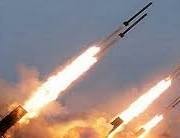
War, like civilisation itself, advances in stages defined by technology. The spear gave way to the sword; the musket replaced the bow; mechanised armour transformed the First World War; and nuclear weapons defined the strategic anxieties of the twentieth century. Today humanity may be witnessing another profound transformation. The present conflict involving the United States, Israel, and Iran is widely regarded by analysts as the first war in which Artificial Intelligence has become an operational force on the battlefield.
This does not mean that robots are independently fighting wars. Rather, it means that algorithms and machine learning systems now play a decisive role in intelligence gathering, target identification, and operational decision-making. The speed and scale at which these systems process information represent a revolutionary shift in the conduct of warfare.
From Human Analysis to Machine Speed
In earlier conflicts, military intelligence depended heavily on human analysts studying reconnaissance photographs, intercepted communications, and field reports. Such analysis often required days or weeks before commanders could confidently make operational decisions.
Artificial Intelligence has dramatically altered this process. Modern AI systems can process vast streams of satellite imagery, electronic signals, drone footage, and cyber intelligence in real time. Algorithms can identify patterns, detect suspicious activity, and suggest potential targets almost instantly.
In military doctrine, the sequence of actions leading to an attack is often called the “kill chain”: detect, identify, decide, and strike. AI now accelerates every stage of this chain, allowing military planners to operate at what strategists describe as “machine speed.” Decisions that once required careful deliberation may now occur within minutes or seconds.
The Data Battlefield
One of the defining features of modern warfare is the enormous quantity of data generated by surveillance systems. Satellites, reconnaissance aircraft, cyber sensors, and unmanned drones produce torrents of information every hour.
Human analysts alone cannot realistically process such quantities of intelligence. Artificial Intelligence therefore acts as a force multiplier, filtering information and highlighting what may be operationally significant. In the current conflict, AI-assisted systems reportedly help military planners map infrastructure, track missile deployments, identify command centres, and analyse patterns of military movement.
The battlefield, in effect, has expanded from physical territory to a digital landscape of data and algorithms.
Autonomous Systems and AI-Assisted Weapons
Artificial Intelligence also influences the weapons themselves. Modern battlefields increasingly deploy AI-assisted drones, loitering munitions, automated missile defence systems, and smart targeting technologies.
These systems can track and intercept threats with extraordinary speed. Missile defence platforms, for example, rely on algorithms capable of predicting the trajectory of incoming projectiles and calculating interception paths within seconds.
Human operators remain involved in the decision-making process, but increasingly their role resembles that of supervisors of highly sophisticated machines.
Cyber Warfare: The Invisible Front
Another dimension of this AI-driven conflict is cyber warfare. Before conventional strikes occur, adversaries attempt to disrupt each other’s communication systems, radar networks, and digital infrastructure.
Artificial Intelligence is increasingly used to detect vulnerabilities, analyse network behaviour, and conduct defensive cyber operations. In this sense, modern war may begin not with artillery fire, but with lines of code.
This invisible struggle over digital systems can determine whether aircraft navigate safely, missiles reach their targets, or defence systems function effectively.
The War of Narratives
Artificial Intelligence has also entered the realm of information warfare. Social media platforms during conflicts now carry vast quantities of synthetic images, AI-generated videos, and automated messaging campaigns.
These tools can shape public opinion, influence international perceptions, and complicate the task of verifying truth. In modern conflict, the battle for narrative may be almost as important as the battle for territory.
Ethical Questions and Strategic Risks
The emergence of AI in warfare raises significant ethical and strategic concerns. If an algorithm recommends a target that results in unintended casualties, who bears responsibility? Is it the programmer, the military commander, or the political leadership?
There is also the danger of automation bias—the human tendency to trust machine recommendations even when caution might be warranted. In high-speed conflict environments, there may be little time to question the judgement of complex algorithms.
Perhaps the greatest concern is that AI may accelerate the tempo of warfare to the point where conflicts escalate faster than diplomacy can intervene.
A New Epoch in Military History
Military historians often divide warfare into technological eras. The age of industrial warfare introduced tanks, aircraft, and mechanised armies. The nuclear age transformed strategy through deterrence and mutually assured destruction.
The present moment suggests the dawn of another era—the age of algorithmic warfare.
In this new environment, data becomes ammunition, algorithms become advisors, and machines compress the time available for human judgement. The U.S.–Israeli conflict with Iran therefore represents more than a regional confrontation. It signals a profound transformation in how wars may be fought in the twenty-first century.
Conclusion.
Artificial Intelligence will not eliminate the human dimension of war. Political decisions, strategic calculations, and moral responsibility will always remain fundamentally human.
Yet the tools with which wars are fought are changing rapidly. The integration of AI into military operations marks a turning point comparable to the introduction of gunpowder or nuclear weapons.
The current conflict may therefore be remembered by historians as the first true AI war—a moment when the algorithms of the digital age stepped decisively onto the battlefield.
Whether this transformation ultimately makes war more precise or more dangerous remains one of the defining questions of our time
Story: Col Augustine Ansu Rtd.