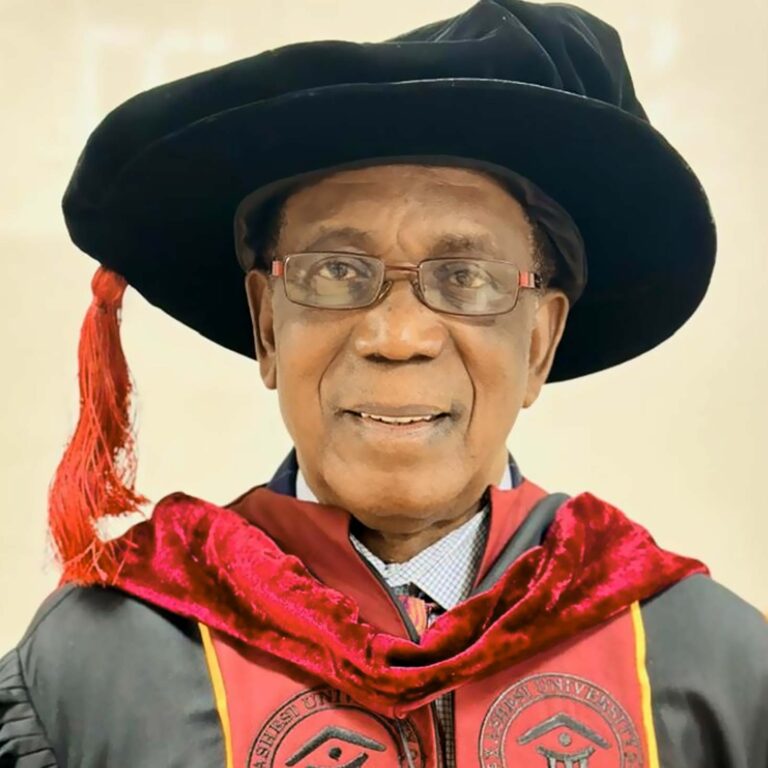

In 2027, Ghana may find itself reopening one of the most sensitive chapters of its national story.
That year marks the 25th anniversary of the death of Bafour Osei Akoto, royal linguist to the Asantehene, political strategist, and founder of the National Liberation Movement (NLM). To commemorate the milestone, scholars are preparing to release a major new biography built on decades of archival material.
But this will not be a quiet academic tribute. The book could trigger a full-scale debate about who really shaped Ghana’s independence and whose voices were left out of the national record.
For more than half a century, the dominant account of Ghana’s independence has centred on the towering figure of Kwame Nkrumah and the political triumph of the Convention People’s Party.
Yet critics argue that the story has long been told from one intellectual and political perspective.
The forthcoming biography raises an uncomfortable question: what if Ghana’s independence history was largely written without the internal perspective of the Asante political leadership who fiercely opposed Nkrumah’s centralisation project?
Many of the scholars and writers who documented the independence era were not themselves embedded in the political culture of Asante. As a result, supporters of the new biography argue that the motivations and worldview of Asante leaders were often misunderstood or simplified. This includes the political thinking of figures such as Akoto and the Asantehene, Otumfuo Sir Osei Agyeman Prempeh II.
Today, the existence of regions in Ghana is taken for granted. But in the 1950s, the issue was fiercely contested. Kwame Nkrumah favoured a highly centralised national state, fearing that strong regional autonomy could fracture the young country.
The National Liberation Movement argued the opposite. Its leaders believed Ghana’s stability required constitutional safeguards for regional authority, particularly for historically powerful polities like Asante. The compromise that emerged—a state organised into regions rather than a single centralised bloc—was the product of intense constitutional struggle. The new biography promises to show how central Akoto and the NLM were in forcing that compromise.
Much of the new research is built around Akoto’s own writings and the archive he assembled after his detention during Nkrumah’s government.
In the early 1960s, Akoto was imprisoned at Nsawam, one of several opposition figures detained during the political confrontations of the era. When he emerged from prison, he reportedly realised that the national story of the independence struggle had already been shaped, largely without his voice.
According to accounts preserved by his family, Akoto responded in a way unusual for a political figure of his time. He began gathering historical evidence with remarkable determination. Documents, speeches, pamphlets, Hansards, newspaper archives, and political booklets became part of a growing personal collection. He reportedly travelled abroad, including to London, to retrieve copies of documents that could clarify events he had personally witnessed.
For historians today, the archive he left behind represents something rare: a political actor consciously assembling documentary evidence to challenge the way history had been recorded.
Another dimension the new biography explores is the institutional culture of the Asante court. Akoto was not merely a politician; he was Otumfuo’s Kyeame, the royal linguist, one of the most influential offices within Asante’s traditional governance system. Many political histories have treated the NLM purely as a modern political movement, but the decisions taken by leaders such as Akoto and Otumfuo Sir Osei Agyeman Prempeh II were also shaped by deeply rooted constitutional traditions within Asante political culture.
Supporters of the new biography argue that ignoring this dimension has led to misunderstandings about why certain decisions were made during the independence era.
Akoto’s own memoir, Struggle Against Dictatorship, now difficult to obtain, offers an intriguing insight. Rather than writing a full personal narrative, he devoted most of the book to the political conflicts beginning around 1954. His early life and traditional career received only brief attention.
According to the author, A. A. Afrifa Akoto, the autobiography had a specific purpose: to correct what Akoto believed were distortions of the political history between 1954 and 1966.
The new biography goes much further, reconstructing his life both as a court official within Asante tradition and as a central actor in one of the most contested political periods in Ghana’s history.
Even before its official release, the biography has begun circulating quietly among a small number of readers. If its documentation holds up, historians say it could provoke a serious re-examination of Ghana’s independence narrative, particularly the relationship between Nkrumah’s government and the regional movements that challenged it.
That debate could be uncomfortable. It may raise the possibility that parts of the national story were written while some of the people at the centre of those events were unable to speak publicly.
In 2027, with the publication of this biography, those voices may finally return to the conversation.
Story: Lawal Mohammed