
Per the Minister of Food and Agriculture, the initiative aims to reduce Ghana’s $2 billion annual poultry import bill by enhancing local production capacity.
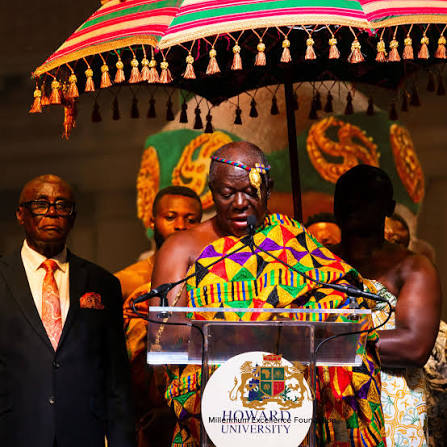
In an engagement with the Ministry of Food and Agriculture at the Manhyia Palace, the Asantehene, Otumfuo Osei Tutu II, voiced critical concerns about Ghana’s continued dependence on imported food staples such as onions and tomatoes.
Drawing parallels between the government’s current “Feed Ghana” initiative and the historical “Operation Feed Yourself” campaign of the 1970s under General Kutu Acheampong, the Asantehene called for a structural overhaul of the nation’s agricultural sector.
Otumfuo Osei Tutu emphasised the importance of self-sufficiency in food production, appealing to both youth and traditional leaders to champion agriculture as a viable path to national development. He specifically urged chiefs to revise land-access policies that currently hinder agricultural expansion, advocating instead for equity-based arrangements over prohibitive upfront payments.
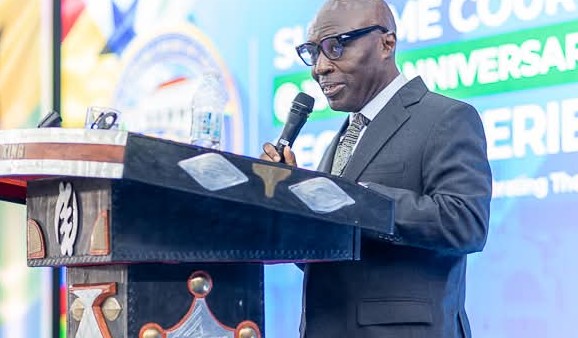
He also reaffirmed his full support for the Minister of Food and Agriculture, Eric Opoku, commending his leadership and encouraging sustained efforts toward agricultural revitalisation. Otumfuo underscored that reliance on extractive industries like gold and oil cannot independently drive development, reiterating agriculture’s centrality to national growth and food security.
In his response, Minister Eric Opoku expressed gratitude for the royal endorsement and outlined ongoing interventions to boost domestic agricultural output, spotlighting the “Nkoko Nkitinkiti” poultry initiative, soon to be launched in Kumasi, as a flagship program under the National Democratic Congress (NDC)’s 2024 campaign platform.
Per the Minister of Food and Agriculture, the initiative aims to reduce Ghana’s $2 billion annual poultry import bill by enhancing local production capacity, thereby improving food security, generating employment, and fostering sustainable farming practices.
The interaction highlighted a shared commitment between traditional authority and government to reframe agriculture as a cornerstone of Ghana’s economic sovereignty.
Story: Janet Ayethe