A vital part of the driving force behind the country’s economy.
If ever there is a service provider who is held in a bemused state by users of their services that service provider is the Kayayei. The Kayayei is both adored and unappreciated by her customers.
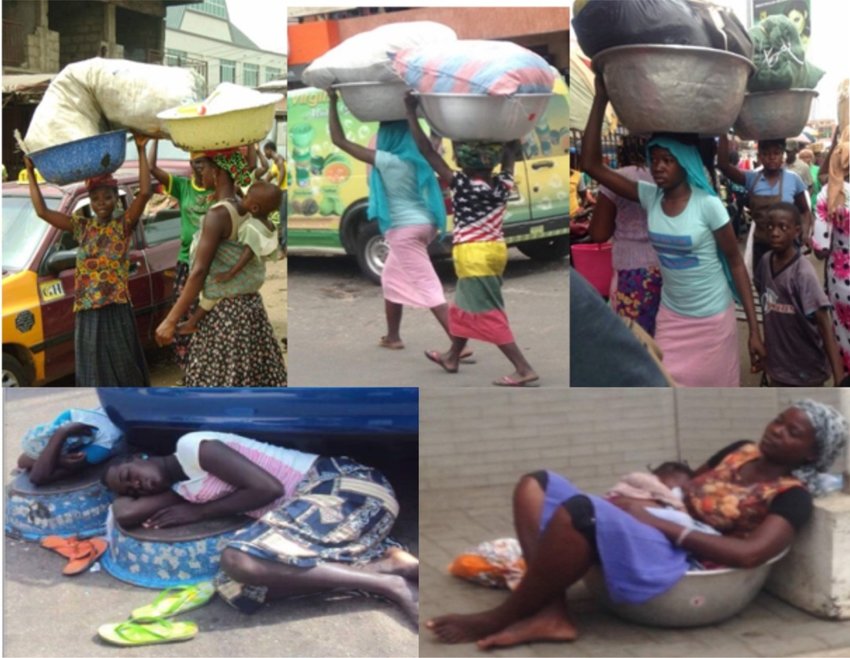
With ages ranging from 8, the Kayayei work as head porters in urban markets. They carry loads for customers, including shoppers, traders, travelers, and anyone who needs items transported on their head for a fee.
Most of the head porters are internal migrants from the five northern regions of the country to southern Ghana to seek greener pastures.
Studies show that most of the migrants come from rural areas while communities with higher levels of literacy, income, higher rates of subsidised medical care, and, better access to water and sanitation are less likely to produce migrants.
The 2018/19 mapping exercise by the Ministry of Gender, Children and Social protection (MOGCSP), showed that there were about 100.000 Kayayei, including their children, nationwide, with 85,600 working in the Greater Accra Area, 22,500 in the Ashanti Region and about 1000 in the Brong Ahafo Region.
Though migration has existed for decades; a new form of migration – young girls and women aged between 10 and 35 years migrating is the trend.
This new breed of migrants stay in their preferred locations for a maximum of five years to provide for themselves and their families economically.
To people with no formal qualifications or training, carrying loads is a preferred job since all that one needs is a basin or a pan in which the items are carried.
Some Kayayei sources say some factors that push the young girls down south are: to raise money to pay school fees if their parents are unable to; lack of other viable employment options, due to a lack of jobs or training opportunities; and, poor academic performance and therefore little possibility to continue their education.
Others are: unpredictable rainfall leading to crop failures and increases in poverty; the need to earn money to buy materials considered necessary for a bride to take into married life; and, mistreatment and abuse from family members, including the threat of forced marriage and abusive fostering relationships within the extended family.
According to the sources some pull factors that the young migrants face up north are: perceived glamour of urban life exaggerated by returnee migrants in many instances; the pursuit of economic opportunities; and, the chance to live independently and gain social skills to prepare them for adult life.
The Kayayei business like any other job has many risks attached.
The business of the Kayayei is labour-intensive blue-collar jobs – women and girls carry loads of all sizes on their heads to navigate the busy streets of Ghanaian cities.
No matter the aversion people have for the business the head porters play a very significant role in the economy of the country; not forgetting the taxes, levies, and tolls, they pay to city authorities.
The Kayayei face a serious challenge when it comes to finding accommodation. Since they are unable to afford or rent rooms, they have no choice but to sleep on the streets, on store verandas, or even in parked vehicles. This puts them at risk of being targeted by rapists, robbers, and other forms of danger.
Another challenge is coping with their young ones while at work.
“Our concern is mainly about our children. We would prefer to take them to childcare centres near or in the market while we work so that we pick them up afterwards. This will enable us to work effectively”, says Aishatu, a young mother.
Without any notable government assistance, the porters on their own have developed strategies to support each other; for instance, sharing meals and child care responsibilities.
“Politicians remember us during elections, they come to us for our votes. But after elections they maltreat us and sack us from where we work”, according to Amina Awudu, a Kayayei.
In Accra the porters have an association that is liaising with the authorities for the provision of social protection initiatives: child care, elimination of harassment, and access to training, finance and additional employment opportunities.
“Some of the girls want to further their education but they don’t have the means. Others are eager to learn a trade. Some of us would like to start a business. If they make loans available, we can work and pay back. This support will enable us to take care of our children. It will be very great if the government can assist us with this”, some members disclose.
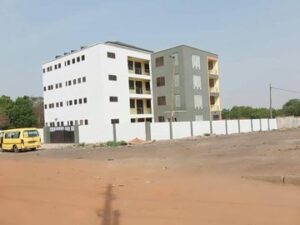
In 2019, the IMF through its Country Representative, Dr Albert Touna Mama, announced that in line with its social responsibility initiatives; it was to build a center for female head porters in Accra to provide them with accommodation and a skills training centre. Not long ago, Dr Mahumudu Bawumia true to his promise provided the porters a modern hostel with free TVET education.
It is hoped that with these two projects in place, the accommodation, skills acquisition, and education part of their challenges will be solved to some extent and the lives of the porters improved.
Looking at the ages of many porters, the government, non-governmental organisations, and public-spirited individuals should share ideas, cooperate and collaborate more to ensure that the head porters have a future to live.
Even though they encounter numerous challenges, they manage to earn sufficient income to support themselves and send money back to their families on a monthly or yearly basis. This financial support helps to cover their siblings’ and children’s education expenses, as well as contribute to the development of their local communities.
The Kayayei are a vital part of the driving force behind the country’s economy.
Story: Oppong Baah