
At a time when African creatives are increasingly reshaping global culture, British-Nigerian performer Funke Adeleke stands out as a compelling example of artistic reinvention. Moving seamlessly between music, theatre, film and writing, the Yoruba-born artist has built a career that reflects the growing international influence of African talent while demonstrating how creativity can transcend borders, disciplines and expectations.
Before turning to acting full-time in 2017, Adeleke established herself as a formidable musical force as lead singer of the London Afrobeat Collective, one of Britain’s prominent Afrobeat ensembles. During her four years with the band, she co-wrote five of the eight tracks on the acclaimed album Food Chain and toured extensively across Europe, Africa and beyond. A defining moment came during Nigeria’s celebrated Felabration festival in 2015, where the group delivered seven performances in five days before concluding their tour at the legendary Shrine in Lagos, the spiritual home of Afrobeat. In the same year, Adeleke’s contribution to Black British music earned her the Best Black British Artist award at the African Voice Awards, marking a significant milestone in her evolving career.
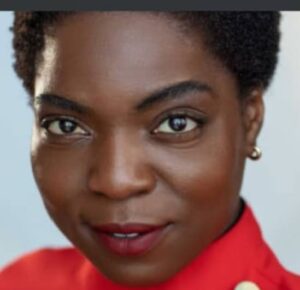
Rather than remaining within the confines of one artistic identity, Adeleke pursued formal training at the Royal Central School of Speech and Drama in London, one of the world’s leading institutions for performing arts. Supported by a bursary from Clean Break, an organisation that empowers women through theatre, she embarked on a new chapter that would see her transition from concert stages to theatre productions and screen performances.
Her theatrical career has since reflected both range and ambition. Adeleke has appeared in productions including I and the Village at the Bread and Roses Theatre, whose ensemble cast received an Offie nomination, and has toured nationally with Sweatbox, a production by Clean Break. Her stage credits also include Wedlock of the Gods, Our Husband Has Gone Mad Again, collaborations with Wretched Theatre, the Royal Shakespeare Company and Graeae Theatre, as well as a critically regarded one-woman performance in Food Shorts at Liverpool Everyman Theatre.
Her screen work further illustrates a multidisciplinary approach to storytelling. In the film Oba, Adeleke not only portrayed the character Aunty Aduke but also wrote and performed the film’s musical score, demonstrating a rare ability to unite performance and composition within a single creative vision. Audiences in Ireland have also become familiar with her through the Women’s Aid campaign, which has been broadcast across multiple platforms for the past four years.
For cultural observers, Adeleke’s career mirrors a broader shift within the global creative industries, where artists increasingly move fluidly across mediums and identities. Her journey—from Afrobeat stages and international tours to theatre, film and writing—reflects a generation of African creatives redefining artistic boundaries and contributing new narratives to the world’s cultural landscape.
In an era where the arts are often viewed as instruments of cultural diplomacy and social change, Funke Adeleke’s story is more than that of a successful performer. It is a testament to the transformative power of creativity, the importance of representation, and the growing role of African voices in shaping global conversations through music, theatre and film.
Story: Kakale Adams