As the State of the African Diaspora (SOAD) marks its eighth anniversary, one of its former senior diplomats has declared the institution a catalyst for redefining African diplomacy, cultural engagement and diaspora relations, underscoring its growing influence despite questions surrounding the evolving role of non-state diplomatic actors.
In a statement commemorating the milestone, Amb. Dr. Jamezany James, ECOWAS West African Youth Ambassador and former SOAD Roving Ambassador, described the organisation as a turning point in his diplomatic career and credited it with elevating his profile on the continental and global stage.
According to the ambassador, his appointment by Prime Minister Dr. Louis Georges-Tin in July 2023 as a SOAD Roving Ambassador marked a significant transition from the creative arts into international diplomacy, enabling him to participate in initiatives linking Africa with its global diaspora.
“SOAD has been a divine alignment in my journey,” he stated, adding that the appointment strengthened his credentials in cultural and public diplomacy.
His remarks come as SOAD continues to position itself as a global platform advocating stronger institutional ties between Africa and its descendants worldwide under the banner of what it calls Africa’s “Sixth Region.” The organisation’s philosophy seeks to reinforce cooperation between the continent and millions of people of African descent living abroad.
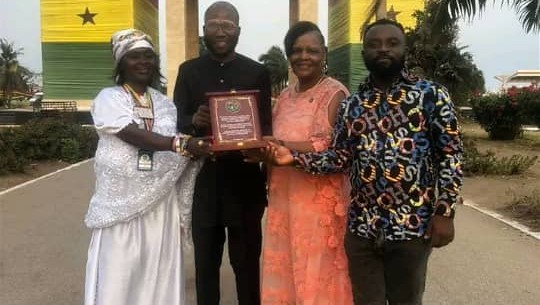
Amb. James highlighted several milestones he attributes to his association with SOAD, including his recognition as a FESTAC Ambassador, national honours received during a ceremony at Ghana’s Black Star Square in 2025, and the conferment of an honorary doctorate in Creative Arts and Culture.
Although he stepped down as SOAD Roving Ambassador last year, the diplomat said his relationship with the organisation remains active. He currently serves as Adviser on the African Creative Industry to the SOAD Prime Minister and pointed to an existing cooperation agreement between SOAD and the Azania Filmmakers Association as evidence of continuing institutional collaboration.
The anniversary also brings renewed attention to the expanding influence of diaspora-led institutions in African affairs. As governments increasingly recognise the economic, cultural and political contributions of the global African diaspora, organisations such as SOAD are seeking to complement traditional diplomatic structures through cultural diplomacy, investment promotion and people-to-people engagement.
Whether these emerging institutions will reshape conventional diplomacy remains an open question. Supporters argue that they provide innovative platforms for engagement beyond state boundaries, while critics contend that their long-term impact will depend on broader international recognition and measurable outcomes.
For Amb. James, however, the mission remains clear.
He described SOAD’s guiding principle: “Reinforcing Africa through Diaspora and Diaspora through Africa”, as more than a slogan, calling it a practical mandate that continues to inspire his work in promoting African creative industries and strengthening connections across the global African community.
As the State of the African Diaspora marks its eighth anniversary, the milestone is more than a celebration of longevity; it is a moment to reflect on the growing influence of diaspora diplomacy in advancing Africa’s global interests. The organisation now faces the critical task of transforming its vision into lasting partnerships that drive sustainable development, deepen cultural ties, attract investment, and strengthen international cooperation between Africa and its global diaspora.
Story: Kakale Adams